Tenerife’s weather makes the island worth visiting at any time of year. The average air temperature is 20–25 °C, and the water warms to 19–24 °C depending on the season. There is no exhausting summer heat and no raw, damp winter, and the temperature varies by only 6–7 degrees between the coldest and the warmest month. This guide will help you choose the best time for your trip according to what you want from it: a beach holiday, hiking, surfing or an escape from continental frosts.
Tenerife — the largest island of the Canary archipelago — lies in the Atlantic Ocean at the latitude of the Sahara Desert, yet its climate is entirely different. The combination of ocean currents, relief and atmospheric processes creates conditions that climatologists rank among the most comfortable for people.
Why Tenerife is called the island of eternal spring
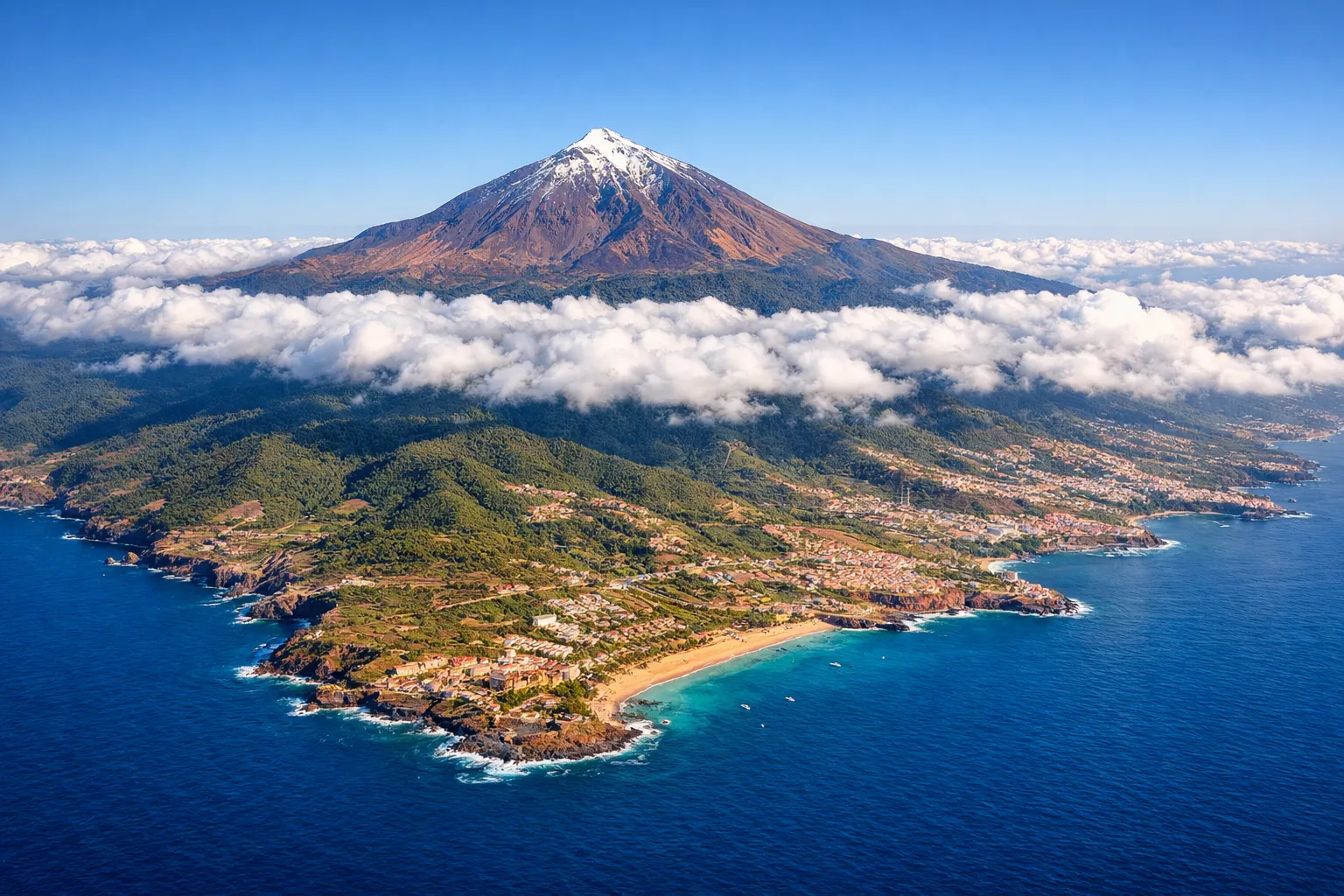
The stability of Tenerife’s climate comes from several natural factors working together. The cold Canary Current, part of the North Atlantic gyre, runs along the coast and keeps the coastal waters from overheating in summer. In winter the ocean gives back the heat it has stored, so the water temperature does not fall below 18–19 °C even in the coldest months.
The north-east trade winds — steady winds blowing from the direction of the Azores — bring moist air. On their way these air masses meet the 3,718-metre Teide volcano, which acts as a natural barrier: clouds gather on the northern slopes, while the south stays sunny and dry.
The Azores High keeps the atmospheric pressure over the archipelago steady. As a result, the island hardly ever sees abrupt changes of weather, hurricanes or prolonged storms. The average air temperature is about 24 °C, and the difference between January and August rarely exceeds 7 degrees.
Weather in the south and north of Tenerife — the key differences
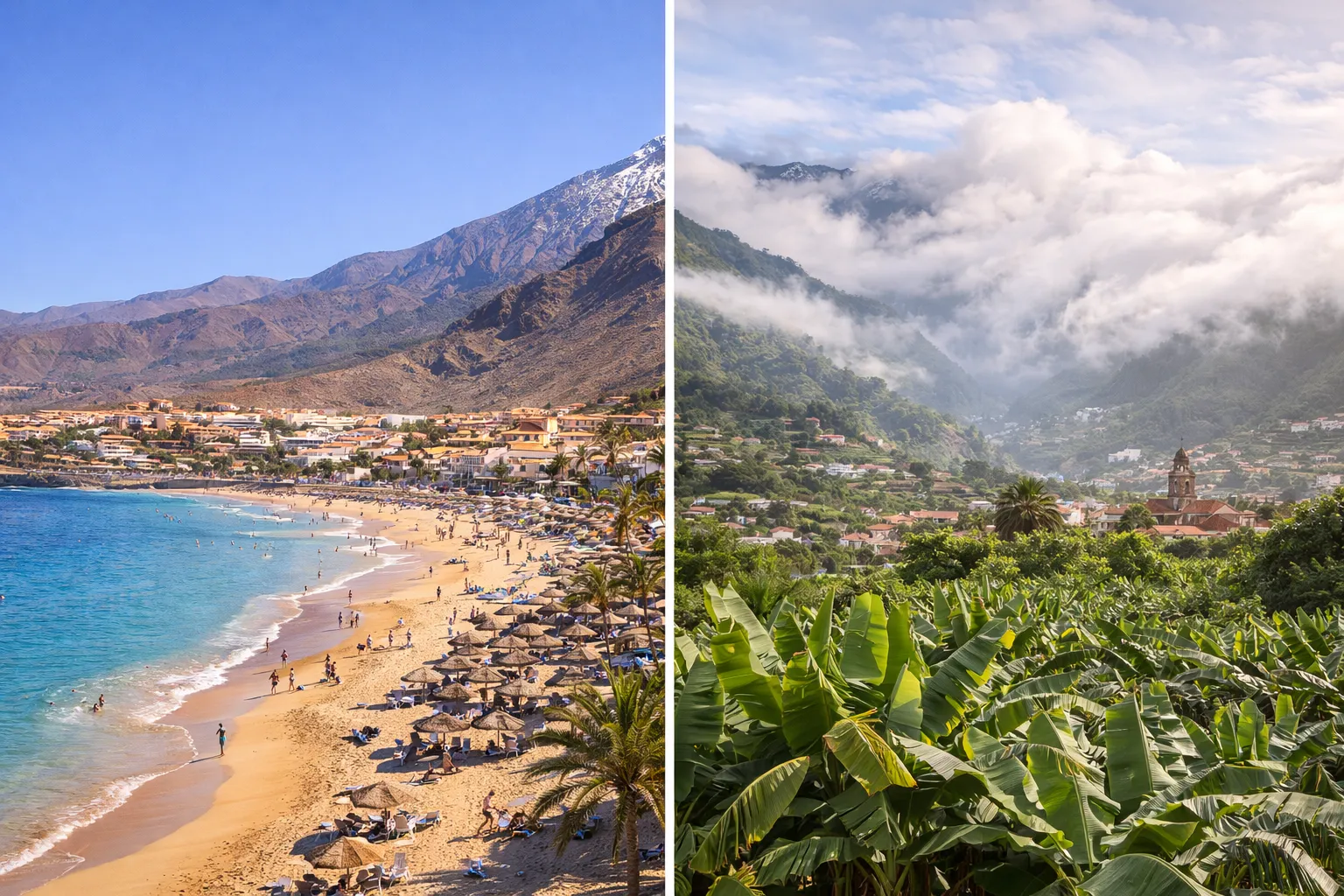
A mountain ridge divides the island into two main climate zones — the humid north and the arid south. But differences in altitude and the complex relief add a further mosaic: over an area of about 2,000 square kilometres, more than 20 microclimate zones have formed — from dry semi-deserts to humid laurel forests.
Weather in the south of Tenerife
The resorts of Las Américas, Costa Adeje and Los Cristianos lie in a dry subtropical climate zone. Daytime temperatures here rarely fall below 20 °C even in winter, and there are no more than 10–15 rainy days in the whole year. The sun shines around 300 days a year, and the humidity stays comfortable thanks to the ocean breeze.
Conditions on the west coast are similar. Los Gigantes and Puerto de Santiago are close to the southern resorts in climate. In winter it is even slightly warmer and less windy here, which makes these places attractive for those who want a quiet holiday away from the tourist crowds.
Weather in the north of Tenerife
Puerto de la Cruz and the La Orotava valley receive most of the island’s rainfall. The air temperature is on average 3–4 degrees lower than in the south, and cloud is a frequent visitor. In return, the north is lush and green: banana plantations, flowering gardens and the ancient laurel forests of Anaga make for an entirely different landscape.
In summer the difference between north and south evens out, but in winter the contrast is obvious. While you can sunbathe in the south in December, in the north you will need a light jacket for evening walks.
Tenerife weather month by month
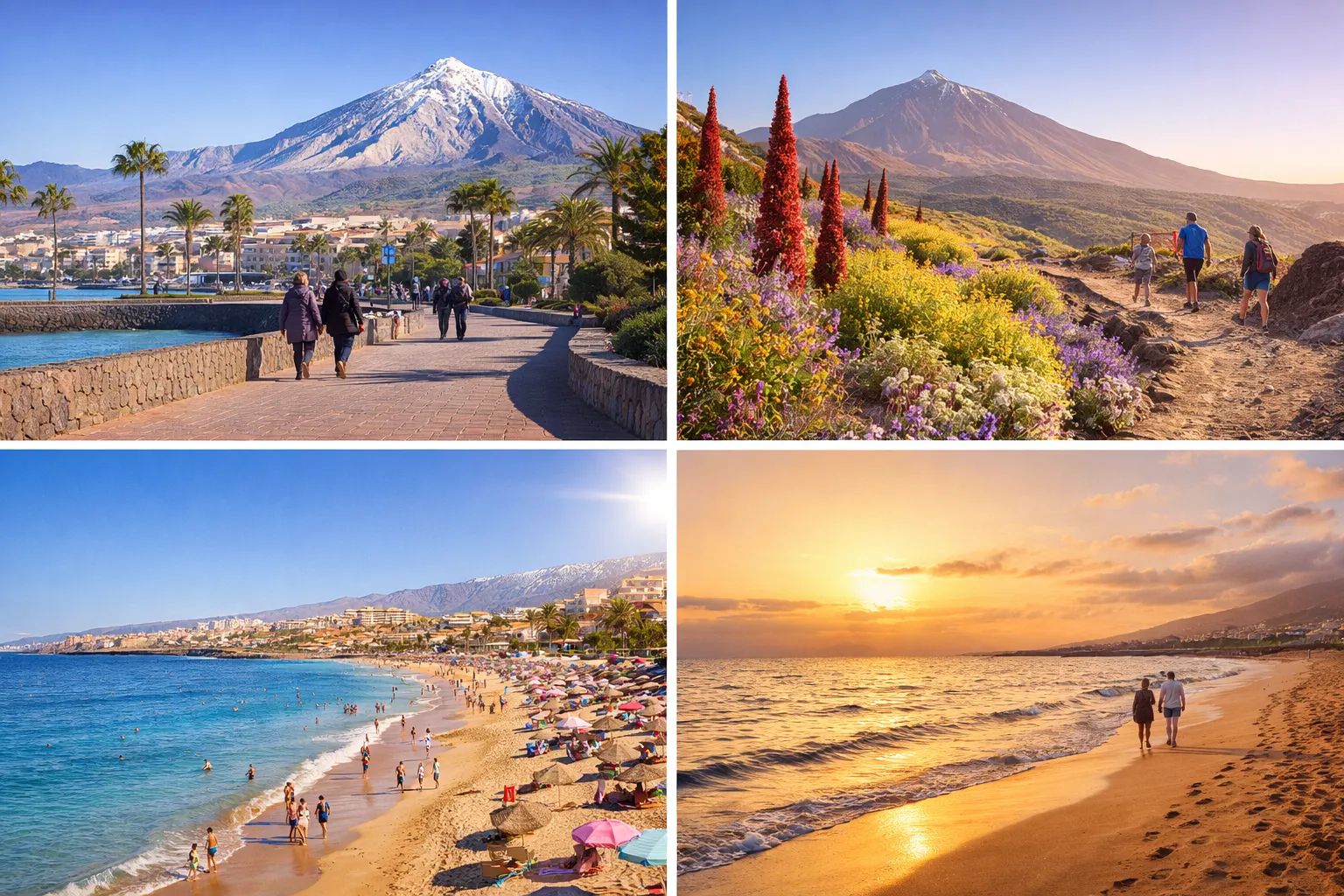
Seasonal changes on the island are mild, but certain patterns will help you plan a trip around your aims.
Winter in Tenerife (December–February)
Daytime temperatures at the southern resorts stay within 20–23 °C and drop to 15–17 °C at night. The water temperature is 19–20 °C — quite comfortable for hardy swimmers, though others may find it cool. February is considered the coldest month, although “cold” here is relative.
At this time of year there is snow on the summit of Teide, which gives the rare chance to stand on a snow-covered mountain and swim in the ocean on the same day. Most of the north’s annual rainfall comes in this period, but the showers are usually short-lived.
Winter attracts Europeans escaping the continental frosts. The mild weather allows open-air events: in February the carnival is held in Santa Cruz de Tenerife — the second largest in the world after Brazil’s.
Spring in Tenerife (March–May)
The temperature rises gradually: 21–23 °C in March, 24–26 °C by May. The water warms more slowly — from 19 °C in March to 20–21 °C in May. The number of sunny days grows, and rain becomes rare even in the north.
The warmth wakes nature: in spring the island is covered in flowers. In the mountains the tajinaste (Echium wildpretii) comes into bloom — an endemic plant with red flower spikes up to 3 metres tall. This is the best time for hiking routes: not too hot for the climbs, but warm enough for comfortable walks.
Summer in Tenerife (June–August)
The warmest period: daytime temperatures reach 27–30 °C and sometimes climb to 32–35 °C. August is the peak of the heat, although the ocean breeze softens it. The water temperature rises to 22–24 °C, making swimming comfortable for everyone.
In summer the southern beaches are crowded — Europe’s holiday season coincides with the best beach conditions. Those looking for cooler air and fewer tourists should consider the north coast: it is a few degrees cooler here, and the higher humidity keeps the air pleasantly fresh.
Autumn in Tenerife (September–November)
Many consider autumn the best time to visit the island. In September and October the water reaches its annual maximum — 23–24 °C — and the air stays warm (25–27 °C) but without the summer heat. Tourist numbers fall and accommodation prices become more affordable.
By November the daytime temperature falls to 23–24 °C and the nights grow cooler (17–18 °C). Rain returns to the north, while the south stays sunny. Strengthening winds and growing waves open the surfing season on the north coast — conditions become more consistent and more interesting for experienced surfers.
Water temperature in Tenerife — the swimming season
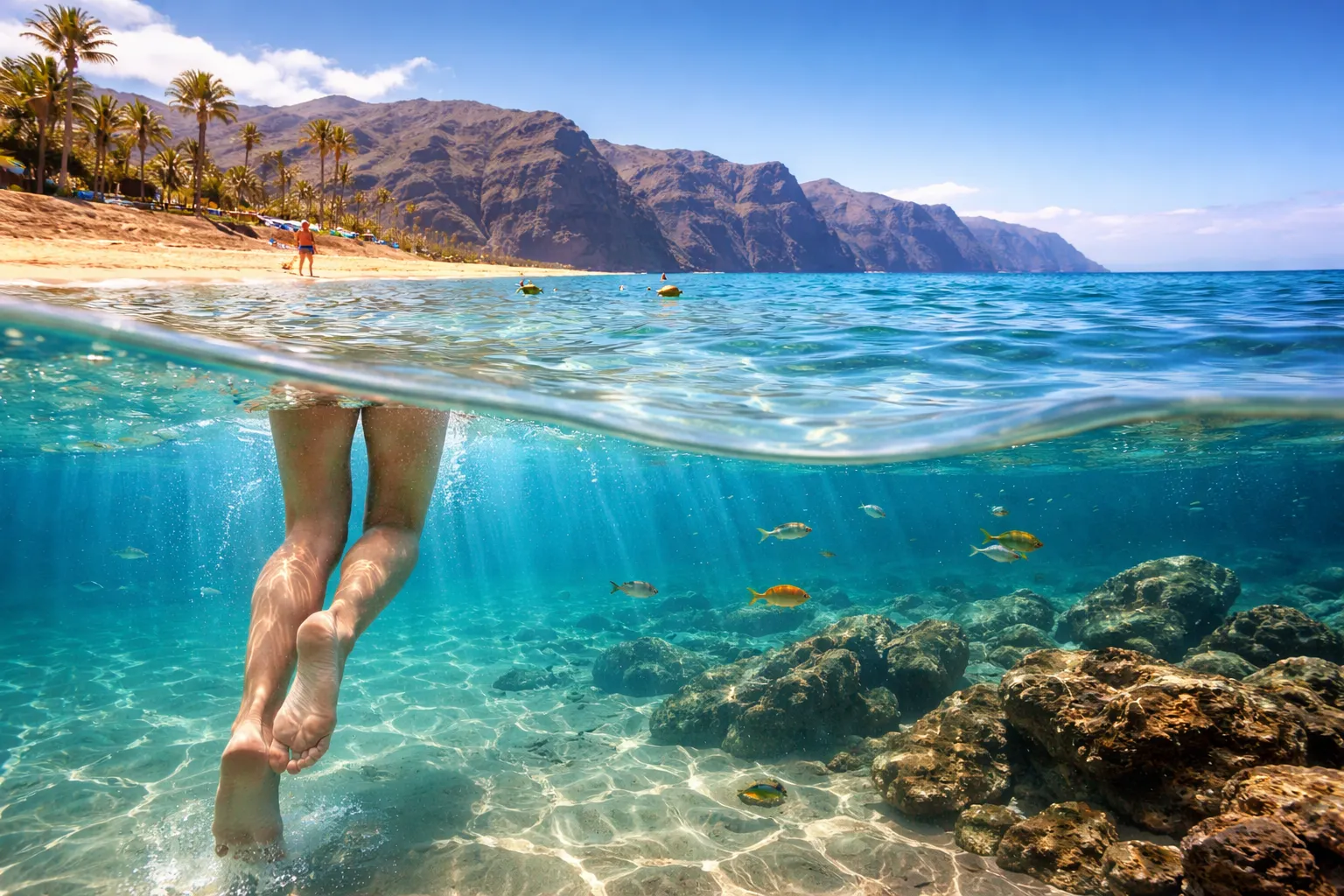
The Atlantic Ocean around the Canary Islands warms up and cools down slowly, thanks to its depth and currents. The water temperature ranges from 18–19 °C in February and March to 23–24 °C in September and October. For comparison, the Mediterranean off the coast of Spain cools to 14–15 °C in winter.
Technically, you can swim in Tenerife all year round, winter included — the water temperature never drops below 18 °C. But everyone feels it differently. Most tourists are comfortable at 21 °C and above — that is the period from May to November. In winter many limit their swimming to the middle of the day, when the water in the shallows has warmed up best.
At the southern beaches the water is usually 1–2 degrees warmer than in the north. Sheltered bays warm up better than open stretches of coast.
When is the best time to visit Tenerife
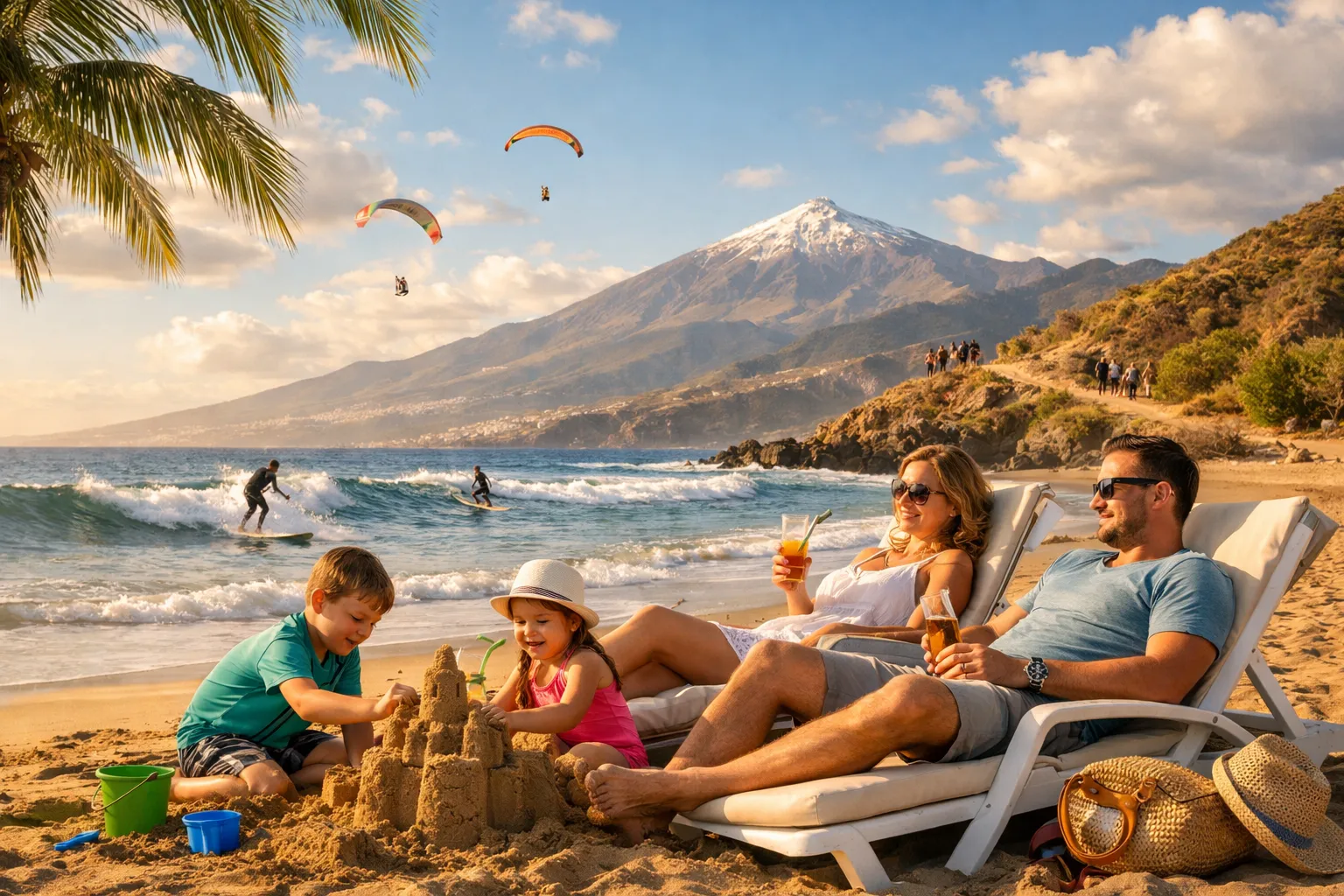
The answer depends on the purpose of your trip:
A beach holiday with guaranteed swimming: June to October. The water is 22–24 °C, sunshine is at its peak and the chance of rain is minimal. Swimming is comfortable in May and November too, but the water is slightly cooler (20–21 °C).
Beach plus sightseeing: April–May or October–November. A comfortable temperature for active sightseeing, while the sea is warm enough for swimming.
Hiking and trekking: November to May. In summer the climb up Teide and the mountain trails are hard going because of the heat. In winter and spring the temperature in the mountains is comfortable, and the scenery is at its most picturesque.
Surfing: the north coast from October to March (big waves); the south and east all year round for beginners. El Médano in the south-east is the centre of kitesurfing and windsurfing.
Escaping winter: December to February. When Northern Europe is at minus twenty, Tenerife is at plus twenty. Even if the water feels cool, sunbathing and walking around in a T-shirt are perfectly possible.
Calima in Tenerife and other weather phenomena
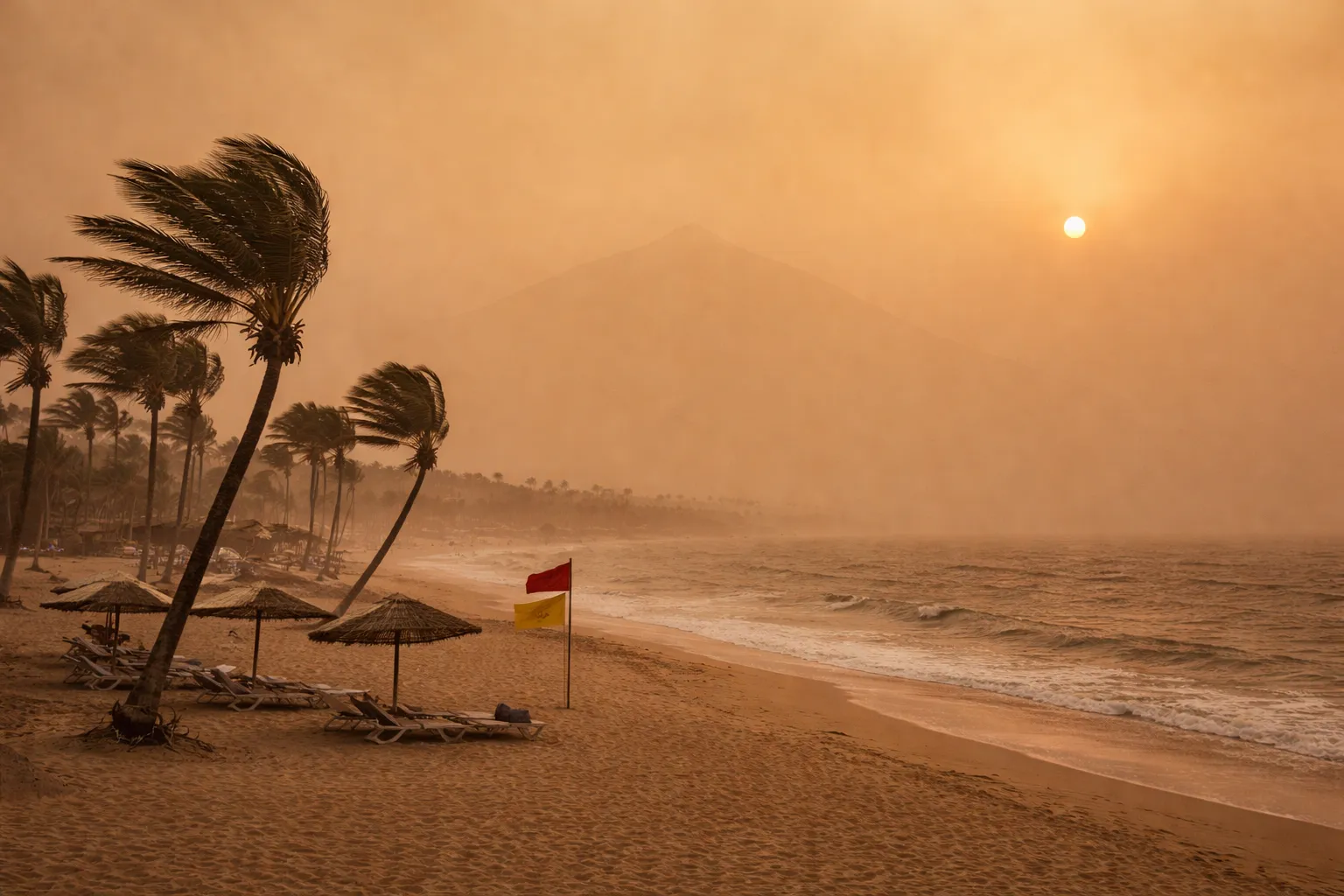
Calima is a weather phenomenon in which a hot wind brings sand and dust from the Sahara. The sky takes on a yellow-grey tint, visibility drops and the air temperature rises sharply — sometimes to 35–40 °C. It lasts from 2–3 days to a week and happens more often in winter, especially from December to March.
Calima poses no serious danger to healthy people, but it is uncomfortable. People with respiratory conditions are advised to limit their time outdoors. In the early 2020s the islands were hit by the strongest calima in decades, with hurricane-force winds of up to 160 km/h — such extreme cases are rare, but they cannot be ruled out entirely.
While calima is an occasional event, rain is a regular part of the weather cycle, especially in the north. That said, rainfall in Tenerife is local and brief. If it is pouring in the north, a 30–40 minute drive south is enough to find yourself in the sun. The weather can change within an hour, especially in winter, so experienced travellers keep both sunscreen and a light jacket in the car.
Another factor that is often forgotten is ultraviolet radiation. Because of the proximity to the equator, solar radiation is strong all year round. You can get sunburnt even on an overcast day, when it seems there is no sun. A high-SPF sunscreen is a must whatever the season.
Tenerife weather forecast and advice for visitors
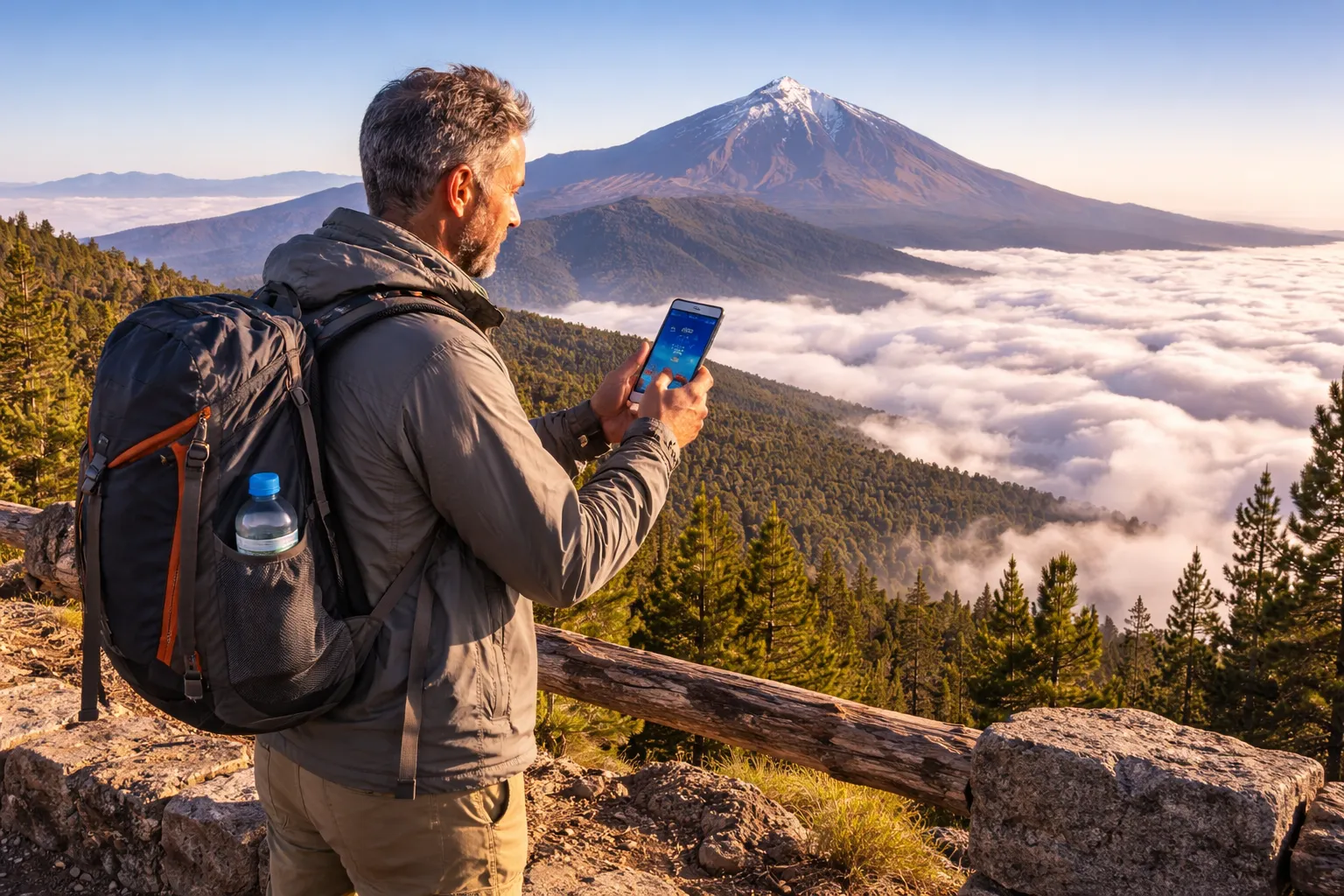
A forecast for Santa Cruz de Tenerife or an “island average” tells you little, given the variety of microclimates. Check the weather for your specific resort: Playa de las Américas and Puerto de la Cruz can differ by 5–7 degrees and have opposite cloud cover.
For a trip to Teide National Park take warm clothes whatever the season. At 2,000–3,000 metres the temperature is 10–15 degrees lower than on the coast, and the wind makes it feel colder still. In winter, snow and sub-zero temperatures are possible on the summit.
Information on the opening hours of the Teide cable car, the state of the beaches and other sites can change with the weather. It is advisable to check the latest details on official sources before planning specific activities.
Tenerife’s weather is the main argument for the island as a year-round destination. Mild winters, summers that are not too hot and a minimum of unpleasant surprises make planning a trip predictable. All that remains is to choose the season to suit your aims — and the island will not disappoint.